Roof Repair in Belleair Bluffs, FL
Fix the Part, or Plan the Roof?
The typical house in Belleair Bluffs dates from about 1972, so the roof on it now is rarely the one it was built with. Roof repair here starts with that roof's own history. We learn when it went on, which code it was built to and how big the damaged section is, then tell you whether a repair is money well spent or money you'll spend twice.
Takes about 30 seconds. A local roofing specialist follows up the same business day.
In Belleair Bluffs, about 4 in 10 homes went up in the 1970s and only 18 have been built since 2000, by Census estimates for 2020 to 2024. A roof lasts nowhere near 50 Florida summers, so most of these houses are on their second or third covering. When something breaks, the useful question isn’t how old the house is. It’s how old the roof is, and what the rules allow a repair to do on it.
We start with that question. Before anyone climbs a ladder, we measure your roof from high-resolution imagery and look up when the current roof was permitted. The free inspection then shows what failed and how the rest of the roof is holding up. You get a plain answer: repair it, or plan for a new one.
A 1972 House on Its Second or Third Roof
Picture two Belleair Bluffs houses on the same block, both finished in 1972. One got a full tear-off in 2014. The other still carries shingles laid in the late 1990s, maybe over an earlier layer. From the street they look about the same. On the roof, they are different jobs.
The 2014 roof has years left, so a torn ridge cap or a few lifted tabs is a short repair. The 1990s roof is near the end, so the same damage may be the first of several failures, and the state’s repair rules treat it more strictly too. Both points come back to one date: when the roof you have now went on.
So that’s the first thing we look up. The permit records for the parcel usually show the last reroof. Our imagery measures each plane in squares, so we know the size of the section around the damage. The inspection fills in the rest: how the shingles bend, how much grit is left on them, and whether the deck feels firm underfoot.
What We Look Up Before a Repair Price
- The current roof's install year
- From the parcel's permit records, not from the year the house was built
- The code it went on under
- Earlier than the 2007 Florida Building Code, or that edition and later
- The size of the damaged section
- Measured in squares from imagery, so the repair can be weighed against it
- What's under the covering
- Checked by hand at the free inspection, including deck feel underfoot
Repair or Replace: How We Make the Call
A repair is the right answer when one part has failed on a roof that is otherwise sound. A new roof is the right answer when the failure is everywhere and the repair would only buy a season. Most Belleair Bluffs roofs we see fall clearly on one side or the other once the photos are in front of you.
The gray area is a roof in its last few years with damage on one slope. There we lay out both paths: what the repair fixes, what it leaves, and how soon the rest is likely to need work. You decide.
When replacement comes out ahead, the roof we put on is backed by our written 15-year guarantee on workmanship, separate from and in addition to whatever the manufacturer offers. Three proposals arrive, labeled Good, Better and Best. Each is a matched system from one manufacturer, bought direct and priced off the measurements we already took. Pick one, sign it from your phone, and that number holds from the moment it’s sent. Our roof replacement page covers that process, and the shingle roofing page covers material choices for houses on the city’s single-family streets.
How the Call Usually Splits
- Repair makes senseOne failed part, the shingles still bend, the deck is firm around it
- Repair makes senseDamage on one plane of a roof installed under the 2007 code or later
- Replacement makes senseBrittle shingles on every slope and grit washing out of the gutters
- Replacement makes senseSoft decking in more than one spot, or the repair would cross the 25% line on an older roof
Common Repairs on Belleair Bluffs Roofs
Leaks get their own treatment on our roof leak repair page, which covers pipe boots, wall flashing and valleys. The repairs below are the other half of the work: damage you can often see before any water gets in.
- Wind-lifted shingles at rakes and eaves. The edges of a roof catch gusts first. Once the seal strip lets go, tabs flap and crease. We replace the creased pieces and nail and seal the course again.
- Ridge and hip caps. Caps crack at the peak and along the hips, where the sun hits hardest. We rebuild the failed run between two sound caps.
- Drip edge and edge metal. Bent or rusted metal at the roof edge lets water reach the fascia. New metal goes under the first course, not tarred on top.
- Nail pops. A nail backing out lifts the shingle above it and leaves a hole when it finally works free. We drive a new fastener beside it and replace the damaged piece.
- Broken tiles or loose metal panels. Covered in the section on tile and metal below.
Damage from a named storm or a hail day is on our storm damage roof repair page.
Fixing One Bad Patch of Decking
The boards under the shingles hold every nail. On a Belleair Bluffs house from the early 1970s, some of that wood may be original, and a small, slow leak can soften it long before a ceiling stain appears.
One soft area is still a repair. We strip the covering and underlayment back past the damage, cut the bad wood out to the rafters, fasten new sheathing and rebuild each layer above it in order. You see the rotten board in your photos before it leaves the site.
What changes the plan is rot that keeps going. If each cut finds more soft wood, or the deck gives somewhere else, we stop and show you before going further. That’s often the moment a repair becomes a replacement conversation.
The Quarter of a Section Limit, With Numbers
Florida’s Existing Building Code, Section 706.1.1 in the 2023 edition, caps how much of an older roof can be patched. Within any 12 months, if the work repairs, replaces or recovers more than 25% of a roof or roof section, that entire roof or section must be brought to the current code.
Squares make it easier to picture. A square is 100 square feet of roof. Say the slope with the damage measures 16 squares. A quarter of it is 4 squares. A run of new ridge caps or a few tabs is a tiny fraction of that. A storm that took 5 squares off that slope is past the line.
Smaller jobs add up, too. Two repairs on the same section a few months apart are counted together under this rule. Since we have every plane measured before the visit, we can show you where your repair lands against that 25% before you see a price, and how your roof is split into sections is something we confirm with the permit office.
Florida's Cap on Repairing an Older Roof
When the 2007 Exception Changes the Answer
Florida Statutes 553.844(5) softens the quarter limit for newer roofs. If the roof or section was built, repaired or replaced to meet the 2007 Florida Building Code or any later edition, and 25% or more of it is being worked on, only the repaired part has to meet the code in force today. The rest can stay as it is. Local governments may not amend that exception.
No house in Belleair Bluffs qualifies by its build date, since almost all of them predate 2000. A roof qualifies by its own date. A reroof done under the 2007 code or later usually does; a covering from the 1990s doesn’t. That single fact can decide whether a large repair stays a repair. The 9th Edition of the Florida Building Code takes effect December 31, 2026, so “the code in effect” keeps moving.
The State Carve-Out for Newer Roofs
- Where it comes from
- Florida Statutes 553.844(5)
- Which roofs qualify
- Ones built, repaired or replaced under the 2007 Florida Building Code or a later edition
- What it does
- Only the part being worked on must meet today's code
- Local changes
- Not allowed. A city or county may not amend this exception by ordinance
Shingle, Tile and Metal Repairs Each Go Differently
Shingles fade, and product lines change. New shingles beside 15-year-old ones will look darker until they weather. We bring the closest color made today and tell you how much the patch will show. On a back slope, most owners don’t mind. On the face you see from the street, you want to know first.
Tile breaks underfoot if it’s walked on wrong, so we step only where the tile is supported. A cracked tile is lifted out and replaced with a matching profile when one exists. If none does, you hear where the odd pieces will sit. Under tile, the underlayment does most of the waterproofing, so a leak there can mean that layer is worn even when the tiles look fine. Our tile roofing page goes further.
Metal repairs are usually fasteners and trim: screws whose washers have dried out, a loose panel edge, or ridge trim that has shifted. Our metal roofing page covers full metal roofs.
Condo Unit Owners and the Association
By the city’s own count, Belleair Bluffs has 650 condominium units and 320 apartments against 540 single-family homes. In a condo, the roof is generally a common element, so the association, not the person living under it, orders and pays for the repair. The association’s own documents spell out who is responsible for what.
If you own a unit and see damage, report it to the association or its manager in writing, with dates and photos. In smaller buildings of two to 19 units, which make up about a quarter of the city’s homes by Census estimates, the arrangement varies, so check your papers before calling a roofer. When an association or building owner hires us, we inspect the roof as we would a house and report to them. Low-slope building roofs are covered on our flat roofing and commercial roofing pages, and residential roofing explains who decides on each kind of home.
Who Can Order the Repair
- Detached house
- The owner. We inspect, photograph and price it for you
- Condo unit
- Usually the association, under its own documents. The unit owner reports the problem
- Apartment building
- The building owner or the manager acting for them
- Share of city homes in 20+ unit buildings
- About 44%, by Census estimates
Which Office Permits a Repair at Your Address
A Belleair Bluffs, FL 33770 mailing address is shared by homes inside the city, homes in the City of Largo and homes in unincorporated Harbor Bluffs, south of West Bay Drive. The tax district on the property appraiser’s record at pcpao.gov sorts them out. BBL is the City of Belleair Bluffs. BTF looks similar but is unincorporated, so Pinellas County handles that parcel. Don’t confuse either with BB, BL or BS, which belong to Belleair Beach, Belleair and Belleair Shore.
Not every repair needs a permit. We ask the right office before pricing the job. When one is needed, we pull it in our name, schedule the inspections and clean up when we finish. For work just south of the line, see our Harbor Bluffs roofing page.
Three Possible Offices for a 33770 Repair
- BBL
- City of Belleair Bluffs. SAFEbuilt handles permits, since August 2025
- BTF
- Unincorporated, not the city. Pinellas County handles permits
- Look-alike codes
- BB is Belleair Beach, BL is Belleair and BS is Belleair Shore
- City of Largo addresses
- Some 33770 mail, including the east end of West Bay Drive, is in Largo, not the city
SAFEbuilt Steps for a Repair Inside the City
Since August 2025, SAFEbuilt has issued every permit for parcels in Belleair Bluffs. For a repair that needs one, a few local details shape the schedule.
The contractor registration can go in with the permit application rather than ahead of it, but our county license status must be current before the permit is issued. SAFEbuilt tracks plan review, fees and inspection results in its CommunityCore portal, and zoning clearance runs alongside the building review. Inspections are typically on weekday mornings, requested by 3 p.m. one business day ahead, and the permit card has to be on site.
The city also limits work hours: 7 a.m. to 6 p.m., Monday through Saturday, with no work on Sundays, Thanksgiving or December 25. We plan Belleair Bluffs repair days around that. One more point for landlords: if the home is titled to an LLC or a trust, SAFEbuilt requires a contractor to apply for the permit.
A Permitted Repair Inside the City
- Contractor registrationCan go in with the permit application; county license status must be current first
- PortalSAFEbuilt runs permits, fees and inspection results through CommunityCore
- InspectionsUsually weekday mornings, requested by 3 p.m. the business day before
- On siteThe permit card and construction documents stay at the job
- Work hours7 a.m. to 6 p.m., Monday through Saturday. No Sundays, Thanksgiving or December 25
Waterfront Repairs and the City’s 50% Rule
Most of Belleair Bluffs sits high on its bluff, outside FEMA’s high-risk flood zones. The edge along the Intracoastal is a different story, with AE and VE zones near the water. For a home there, SAFEbuilt asks for a substantial improvement packet with each permit application, and the packet lists re-shingling or re-tiling a roof among the costs that count.
The city’s threshold is 50%. When the cost of the work reaches half the building’s market value, land not counted, the home must meet current flood rules. An ordinary repair rarely comes close, but on a waterfront parcel we check with SAFEbuilt how a given job is counted before work starts. Unincorporated parcels follow Pinellas County’s 49% instead.
The City's Flood Threshold
What a Repair Visit Looks Like
A repair visit to a Belleair Bluffs home starts with your account of the problem: what you saw, when, and after what weather. Then we go up. We walk the damaged plane, then the rest of the roof, checking the edges, caps and fasteners, and lifting a shingle or two to see how they bend. If the deck is suspect, we check it from the attic as well.
Before we leave, you know what failed and what we’d do about it. If the repair is simple, the price comes to your phone. If the roof is closer to the end, the photos come with an honest read on how long a repair would last. There is no pushy sales visit, and no one calls later to argue the point.
Your Photo Record and Portal
Most good repair work on a Belleair Bluffs roof ends up out of sight. Fresh decking disappears under underlayment, and a new course of shingles covers the nails that hold it. So we photograph each repair three times: as found, opened up and closed.
Those photos sit in your homeowner portal with the schedule, any permit, your documents and a message thread with our team. If storm damage started the repair, the photo report is yours to share with your insurer if you choose to file. The claim stays between you and your insurance company. For a full-roof record with no repair attached, book a free roof inspection.
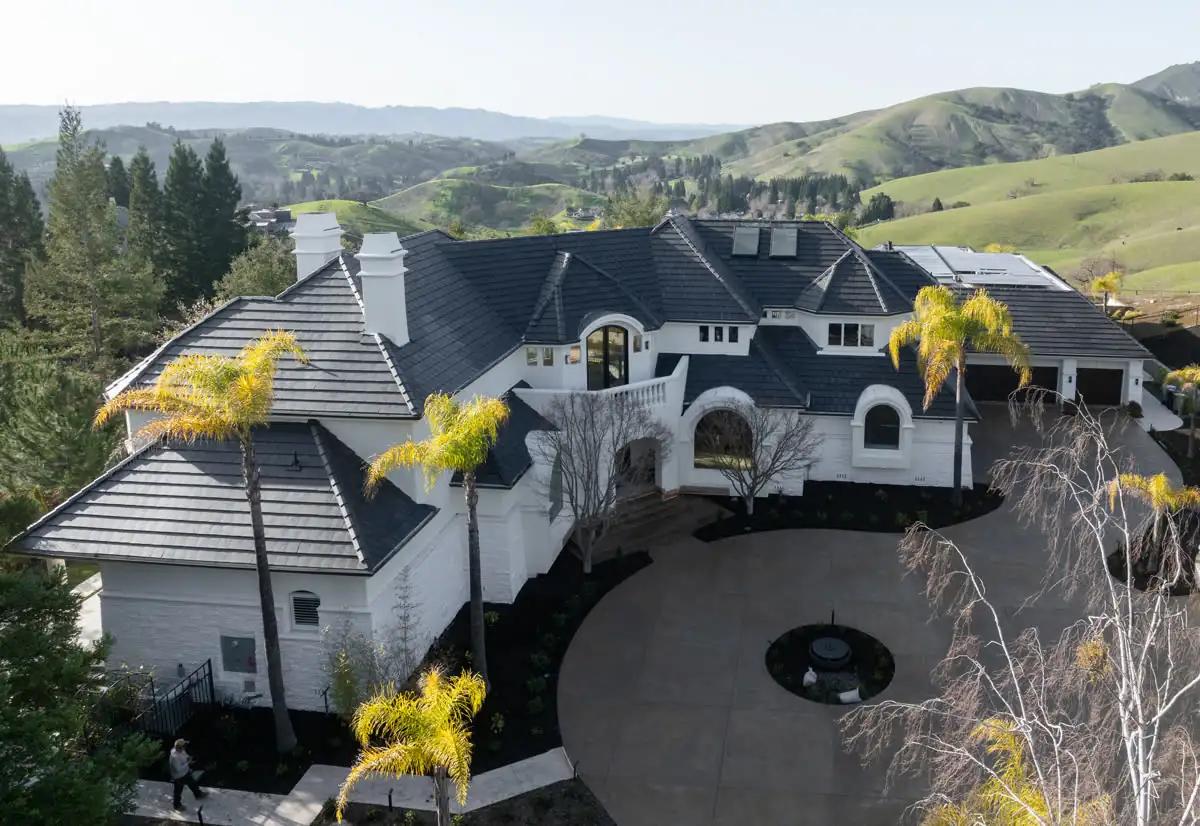
How Roof Repair Works in Belleair Bluffs
- 01
Share Where the House Is
Our team sizes every plane from overhead imagery and checks the permit trail for the current roof.
- 02
We Come Out at No Charge
The damage gets photographed, and you hear plainly if it is worth the money to fix.
- 03
You Approve by Phone
The quote can’t change after it is sent, and it can be spread into monthly payments.
- 04
The Repair Gets Done
Permits carry our name, inspections are on our calendar, and the debris leaves with us.
- 05
The Pictures Stay Yours
As-found, opened-up and finished shots remain in the portal.
Roof Copilot is a Florida certified roofing contractor, license CCC1336568, with liability and workers’ comp coverage. The Belleair Bluffs roofing company page covers the rest of what we do in the city.
Roofs We're Proud Of
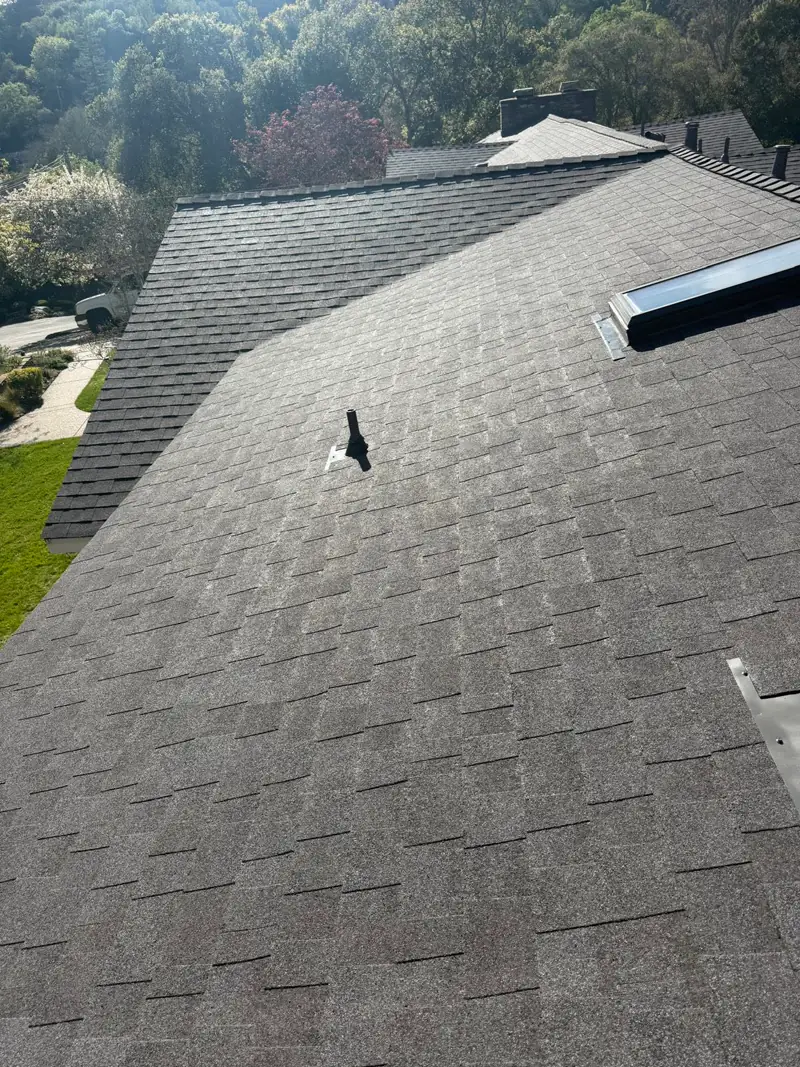
Year workmanship warranty spelled out in your contract, and added to the manufacturer's warranty on the materials.
We are the contractor of record on the permit, and every roof meets Florida code. You have no forms to fill out.
All the old roofing leaves in our trailer, and a magnet sweep of the yard and driveway picks up stray nails.
Florida certified roofing contractor CCC1336568, covered by general liability and workers' comp.
Spread the cost over monthly payments and replace the roof now instead of waiting until you've saved enough.
Belleair Bluffs Roof Repair Questions
Our Roof Was Replaced in 2012. Can One Damaged Slope Be Fixed Without Redoing the Rest?
Usually, yes. A roof put on under the 2007 Florida Building Code or a later edition falls under the state exception, so only the part being repaired has to meet today's code. We confirm the permit year before we quote so the plan holds up.
I Don't Know When My Roof Was Last Replaced. Does That Matter?
It matters more than anything else about a repair. We look for the last reroof in the parcel's permit records before the visit. If the records are unclear, the layers we see at the inspection help fill in the story.
Does a Small Repair in Belleair Bluffs Need a Permit?
Some do and some don't. We check with SAFEbuilt for a city parcel, or with Pinellas County for an unincorporated one, before we price the job. When a permit is needed, we pull it in our name and book the inspections.
Our House Sits Near the Water in a Flood Zone. Can a Roof Repair Set Off the Flood Rules?
A roof repair counts toward the city's 50% threshold, which compares the cost of the work with the building's market value, land excluded. Most repairs are far below that. On a waterfront parcel we ask SAFEbuilt how your job is counted before work begins.
Will You Tell Me If My Belleair Bluffs Roof Isn't Worth Repairing?
Yes, with photos. If the roof has life left, you get a repair price. If it doesn't, you see why, and a new roof stays your choice. Nobody comes back to push you.
Can I Pay for a Larger Repair Over Time?
Yes. Our monthly payment options apply to repairs as well as full roofs.
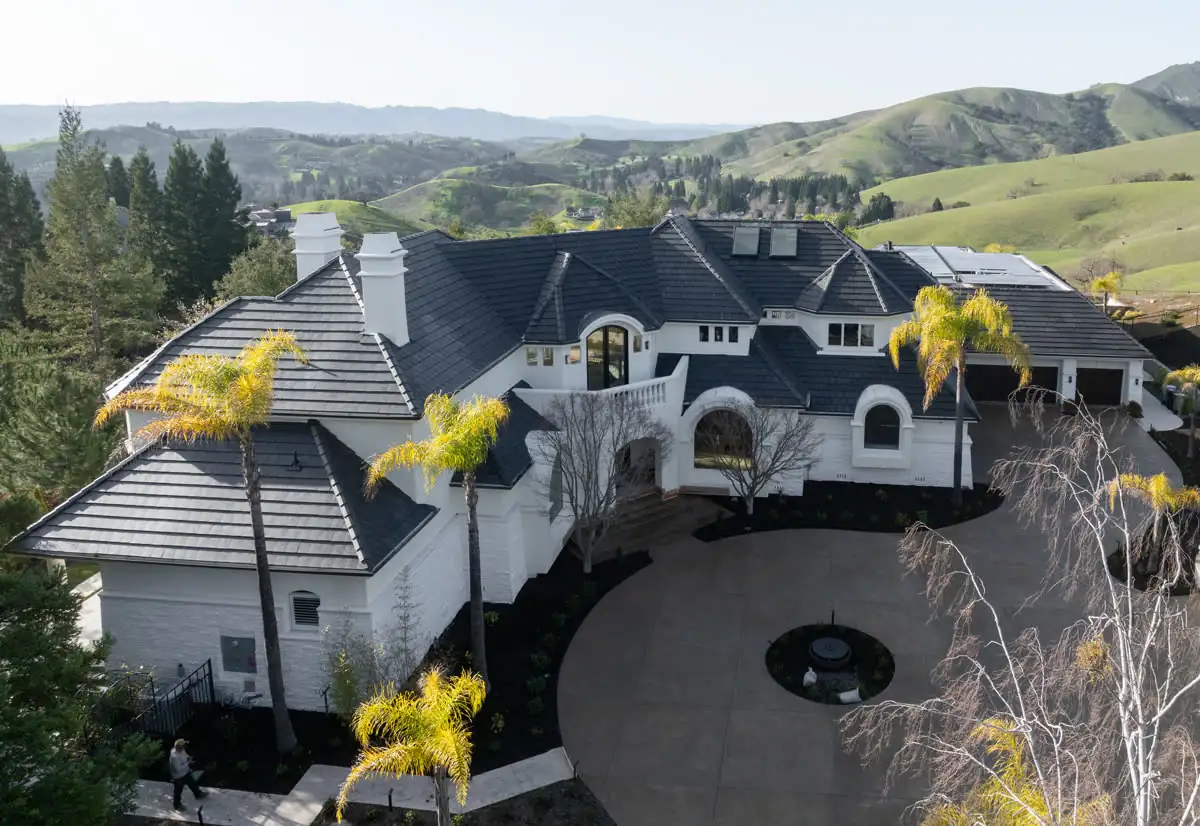
Get Your Belleair Bluffs Roof Measured, Free.
Enter your address. We'll handle everything else.