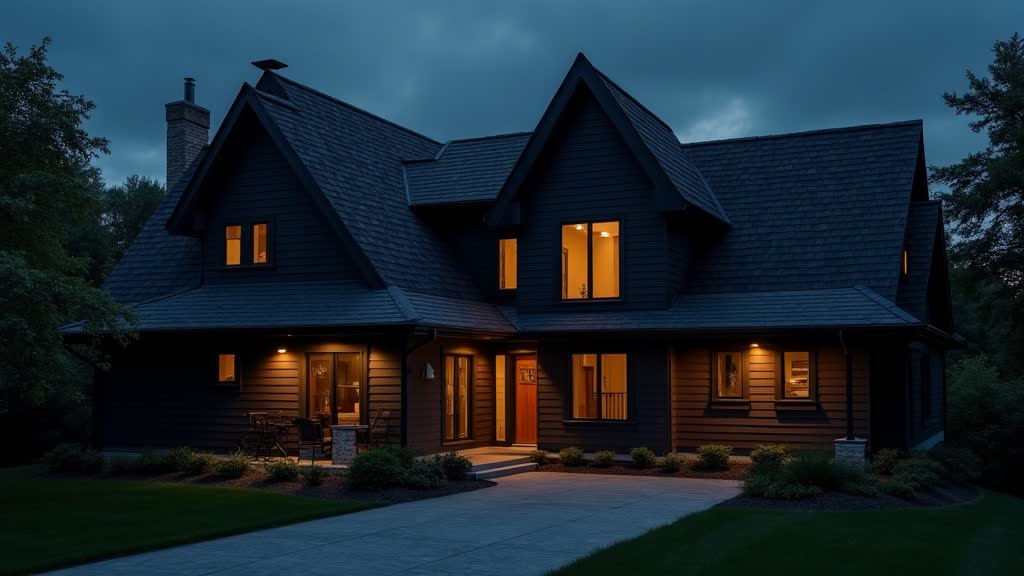
Roof Leak Repair in Belleair Bluffs, FL
Find the Opening, Then Fix It.
Most houses in Belleair Bluffs went up between the 1950s and the 1970s, and that shapes how roof leak repair goes here. A roof that old rarely leaks in the middle of a slope. It leaks at the joints. We stop the active leak, track the water to the joint that let it in, and show you a photo of that spot before anything gets replaced.
Takes about 30 seconds. A local roofing specialist follows up the same business day.
A ceiling stain tells you a roof is letting water in. It doesn’t tell you where. In Belleair Bluffs, where Census estimates for 2020 to 2024 put the median home at 1972 and about 8 in 10 homes before 1980, the answer is usually one of a few joints that age badly. Roof leak repair here means checking those joints in a sensible order, stopping the water, and fixing the part that actually failed.
Where Water Gets Into a Belleair Bluffs House Built Before 1980
The Census numbers for the city break down like this: about 2 in 10 homes from the 1950s, close to 2 in 10 from the 1960s, and about 4 in 10 from the 1970s, the biggest building decade by far. Almost nothing has been built since 2000. Most of these houses have been reroofed since then, some more than once. A new layer of shingles doesn’t mean every part up there is new, though. Pipe boots, wall metal and the roof over an added room are often left in place and can be much older than the shingles around them.
On a Belleair Bluffs house of that age, these are the spots we check first:
- Add-on tie-ins, where a porch, Florida room or carport roof joins the main roof or wall
- Flashing at walls, chimneys and any place one roof steps down to another
- Pipe boots around plumbing vents
- Valleys, where two slopes empty into one channel
- Roof vents and exhaust caps, along with their seals and nails
Sometimes the cause is less common: an old skylight, a nail that backed out, or holes left behind when an antenna or satellite dish came down.
- Pipe boots The rubber collar cracks in the sun
- Wall and chimney flashing Lifts or loses its sealant
- Valleys Two roof planes drain through one channel
- Lifted shingles Storm gusts break the seal strip
- Skylights and vents Seals age out around the edges
- Flat-to-pitched seams Where a porch or addition ties in
Porch and Florida Room Roofs That Join the Main Roof
Lots of older Florida homes have had rooms added over the years. A screened porch gets glassed in, a back patio gets a roof, a Florida room goes up off the kitchen. If your house has one, its roof was probably built later than the main roof, by a different crew, at a much lower pitch.
That joint takes a beating. Every drop of rain that runs down the main slope above it ends up at the seam where the low roof meets the house. If the metal there was cut short, nailed through in the wrong place or simply worn out, water soaks the wall framing or comes through the added room’s ceiling. Even with a sound seam, the low roof itself can give out. Water pools wherever the deck has sagged, old roll roofing splits at the laps, and shingles laid on a roof that is too flat for them let wind push rain up underneath.
The fix depends on what we find. New flashing at the seam is sometimes enough. Other times the low section needs a proper low-slope system, which our flat roofing page covers. Either way, you see photos of the seam before we touch it.
- The tie-in Where the flat section meets the main roof, the classic leak point
- Ponding water Low spots hold water after a storm and wear the membrane out early
- The edge and drain Water has to reach the gutter or drain, or it backs up
Flashing at Wall and Chimney Joints
Flashing is the bent metal that sends water back onto the roof wherever the roof meets something standing up: a wall, a chimney, a dormer, or the face of a higher roof section. On Belleair Bluffs houses with additions or split roof levels, there can be a lot of it.
What we tend to find:
- Step flashing that has rusted through, or was laid in one long piece instead of woven in with each course of shingles
- Counterflashing that has come away from the wall and opened a gap behind it
- Chimney metal buried under years of roofing cement, with the real gap still open underneath
- Kickout flashing that was never installed where a roof edge ends against a wall, so water runs straight into the siding
Once water is behind the metal, it rarely drops straight down. It runs along the deck or down a rafter and comes through the ceiling somewhere else. Patching the roof right above the stain often misses an opening a few feet up the slope.
Plumbing Boots and Roof Vents
Every bathroom and kitchen drain is vented through the roof by a pipe, and each pipe gets a boot: a flat flange tucked under the shingles with a rubber collar that seals around the pipe. Years of sun dry that rubber out until it splits. Then rain runs down the outside of the pipe and into the attic.
A boot leak tends to show up as a round spot on the ceiling near a bathroom, the kitchen or a hallway. Done properly, it is a quick repair. We lift the shingles above the old boot and slide a new one in so its top edge sits under the course above and its bottom edge laps over the course below. Then we seal the nail heads.
Roof vents and exhaust caps fail the same way. Seals harden, nails work loose, and rain blowing in sideways gets under the edge. We check every one on the slope above the wet area, including the ones that aren’t closest to it.
Valleys That Carry Two Slopes of Rain
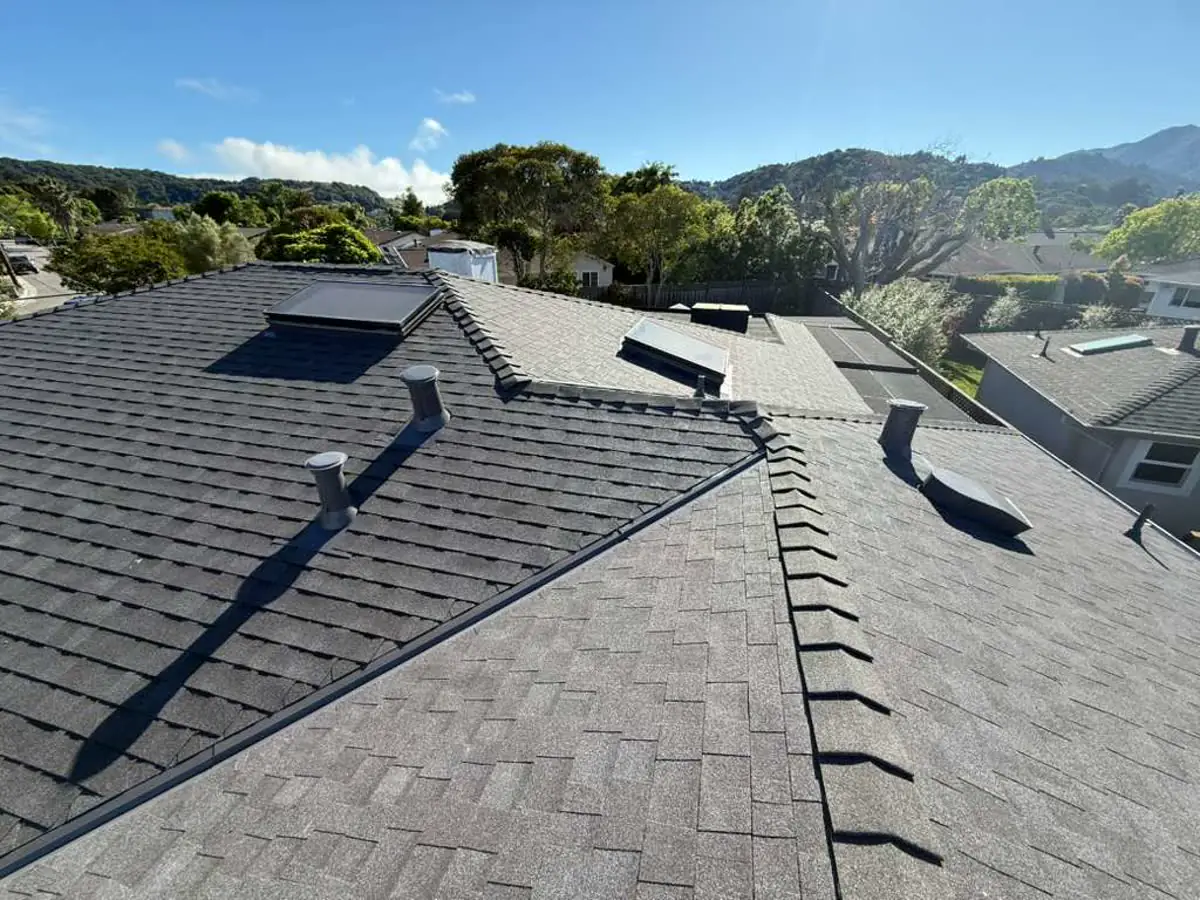
A valley is the inside corner where two roof planes meet. Everything that lands on both planes drains through it, so a valley carries far more water than any other strip of the roof and wears out first. On older homes, valleys also collect leaves and grit that hold moisture against the shingles.
Valley leaks usually come from worn or cracked shingles along the center line, a metal liner that has rusted, or nails driven too close to the channel when the last roof went on. A valley that has started to leak in one spot is usually worn along its whole length. When we repair one, we redo the length that needs it, not just a patch over the drip.
Roof Leak Repair in Belleair Bluffs Starts at the Stain
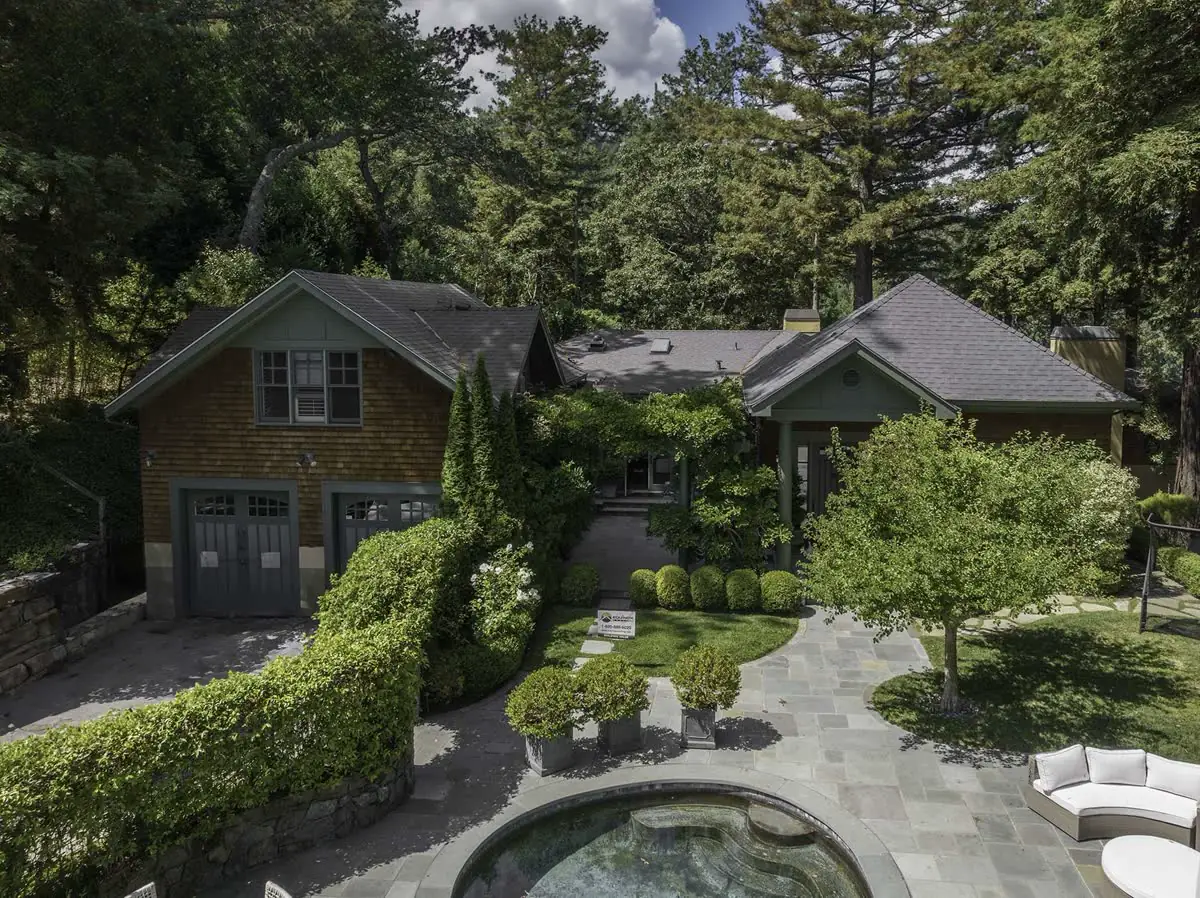
Before we come out, we measure your roof from high-resolution imagery, so we already know where the slopes, valleys, pipes and add-on roofs are.
At the house, we start inside, at the stain. Then we go up into the attic, where wet or darkened deck boards and framing show which way the water ran. On the roof, we start above that wet area and check every possible opening as we work up the slope. When we find it, we take a photo before anything is touched, so you see what we saw.
What you’ve noticed helps a lot. A drip in every rain, a drip only in hard storms, and a drip only when the wind blows from one side each suggest different causes. Sometimes the roof isn’t the problem at all. A clogged AC drain line, a sweating duct or a damp attic can leave a wet spot on a sunny afternoon. In that case we show you the photos and leave the roof alone.
When water is coming in right now, we stop the active leak first and then do the permanent repair once the source is confirmed. If the leak turns out to need a new roof, that roof comes with our 15-year workmanship warranty in writing.
What We Check, in Order
- The ceilingWhere the stain sits, how big it is, and whether it only grows in rain
- The atticWet or darkened deck boards and framing, followed up the slope
- The roofEach boot, vent, wall joint, valley and add-on seam above the wet area
- Your timingWhich rains bring the drip and where the wind came from
- Not the roofAC drain lines, ducts and attic moisture, checked and ruled in or out
About 54 Inches of Rain a Year in Belleair Bluffs
Ten years of ERA5 model data for Belleair Bluffs average about 54 inches of rain a year. Just over 32 of those inches fall from June through September. August is the wettest month at about 9.5 inches, and July is close behind. March and November are the driest, under 2 inches each.
That pattern matters for leaks. In the dry months, a worn boot or a lifted piece of flashing can go months without showing a drip. Then summer storms arrive day after day, the roof never fully dries out, and the ceiling stain shows up. Wind-driven rain makes it worse, because it pushes water sideways under shingle edges and into wall joints that ordinary rain never reaches.
If a storm opened several leaks at once, or pulled off shingles or metal, our storm damage roof repair page explains what we do.
See the numbers
| Month | Avg high | Avg rain | Strongest gust |
|---|---|---|---|
| Jan | 67°F | 3 in. | 61 mph (Jan 17, 2016) |
| Feb | 72.2°F | 2.1 in. | 55 mph (Feb 6, 2020) |
| Mar | 75.2°F | 1.8 in. | 49 mph (Mar 22, 2024) |
| Apr | 79.6°F | 2.8 in. | 50 mph (Apr 30, 2023) |
| May | 84.1°F | 4 in. | 48 mph (May 24, 2017) |
| Jun | 86°F | 7.1 in. | 47 mph (Jun 6, 2016) |
| Jul | 87.3°F | 8.3 in. | 50 mph (Jul 6, 2021) |
| Aug | 87.3°F | 9.5 in. | 63 mph (Aug 4, 2024) |
| Sep | 85.9°F | 7.5 in. | 85 mph (Helene) |
| Oct | 82.5°F | 3.3 in. | 98 mph (Milton) |
| Nov | 76.1°F | 1.9 in. | 62 mph (Nov 11, 2020) |
| Dec | 71.3°F | 3.2 in. | 52 mph (Dec 21, 2018) |
Source: Open-Meteo historical weather (ERA5 reanalysis), daily data for Belleair Bluffs 2016–2025.
Leaks in a Condo or Apartment Building
Belleair Bluffs has more condos and apartments than houses. The city’s own count lists 540 single-family homes, 650 condominium units and 320 apartments, and Census estimates put about 44% of homes in buildings of 20 or more units. In those buildings, the roof usually isn’t up to the person whose ceiling is dripping.
If you own a condo unit, the association typically controls the roof and decides who repairs it. Report the leak to the association or its manager in writing, with dates and photos of the ceiling. If you rent, tell the building owner or the property manager. A leak in an upper unit can also come from a balcony, a window or plumbing, so the building’s own inspection should look past the roof as well.
When an association or building owner asks us to look at a roof, we inspect it the same way we inspect a house and report to them. For larger low-slope roofs, see flat roofing and commercial roofing.
Who Decides on a Leaking Roof
- Detached house you own
- You do. We inspect, show you the opening and price the repair
- Condo unit
- The association usually controls the roof. Report the leak to the association or its manager
- Apartment
- The building owner or property manager decides on roof work
- Your notes help
- Dates, photos of the ceiling and what the weather was doing when it dripped
Permits and Flood Rules for a 33770 Address
A Belleair Bluffs, FL 33770 mailing address doesn’t settle who issues your permit. That ZIP also covers parts of the City of Largo and unincorporated Harbor Bluffs, south of West Bay Drive. Search the property on pcpao.gov and read the tax district on the property appraiser’s record. BBL means the City of Belleair Bluffs. BTF is unincorporated and is not the city, even though the name looks close. Don’t mix them up with BB (Belleair Beach), BL (Belleair) or BS (Belleair Shore).
For parcels inside the city, SAFEbuilt has issued permits since August 2025. Unincorporated parcels go through Pinellas County. Plenty of small leak repairs need no permit at all. We ask the office that covers your parcel before work begins. If a permit is required, it goes in our name, and we book the inspections.
Flood rules also depend on where the parcel sits. Most of Belleair Bluffs sits on high ground outside FEMA’s high-risk flood zones, but the waterfront edge along the Intracoastal is in AE and VE zones. Inside the city the threshold is 50%. Once the cost of the work reaches half of what the building alone is worth on the market, with the land left out, current flood rules apply to the home. Unincorporated parcels fall under the county’s 49% rule. We check with the permitting office how a given job is counted.
Roof Copilot holds Florida certified roofing contractor license CCC1336568 and carries liability and workers’ comp coverage.
Leak Repair Paperwork for a 33770 Address
- Check the parcel
- Look up the address on pcpao.gov and read the tax district on the appraiser's record. BBL is the City of Belleair Bluffs
- Not the city
- BTF is unincorporated. BB is Belleair Beach, BL is Belleair and BS is Belleair Shore
- City permits
- Issued by SAFEbuilt since August 2025
- Unincorporated parcels
- Pinellas County permits the work, and its flood rule is 49%
- City flood rule
- 50% of the building's market value, land not counted
- Who pulls it
- Roof Copilot, in our name, with a copy in your portal
When a Leak Means It’s Time for a New Roof
If the roof is in good shape apart from one opening, you get a repair price and nothing else. But some leaks show the whole roof is worn out. Signs to watch for:
- Water coming in on more than one slope, or a new leak every summer
- Shingles that crack or break apart when bent
- Soft or stained decking in several places, not just around one opening
- Lots of granules washing out of the gutters and downspouts
The Florida Building Code has its own threshold. When more than 25% of a roof or roof section is repaired, replaced or recovered in any 12 months, that roof or section has to meet the current code. State law carves out one exception. When the roof on the house now was installed to the 2007 Florida Building Code or any edition since, the upgrade covers only the section being repaired. With about 8 in 10 Belleair Bluffs homes built before 1980, the year the house went up says little. What counts is when the current roof was installed.
If replacing makes more sense, you get Good, Better and Best roof replacement options, each a matched system from one manufacturer, bought direct. Each one comes with a written 15-year warranty on our workmanship, in addition to what the manufacturer covers. Pick one and sign it on your phone. Once we send a price it doesn’t change, and monthly payments are an option. The shingle roofing page compares choices for single-family streets, and just south of the city we do roof replacement in Harbor Bluffs.
Repair the Area or Bring the Roof to Code?
Photos of Every Hidden Layer in Your Portal
Most leak work happens where you can’t see it: under shingles, behind wall metal, on the deck. So we photograph each stage. You see the opening as we found it, the damaged layers once they are exposed, and the finished repair from both the roof and the attic.
All of it goes into your homeowner portal, along with the schedule, any permit, your documents and our messages to you. There’s no pushy sales visit, and cleanup is included. If a storm caused the leak, those photos become a documented photo report you can share with your insurer if you decide to file. The claim stays between you and your insurance company.
For other roof problems, see roof repair. To have the whole roof looked over before next summer’s rain, book a roof inspection. Our Belleair Bluffs roofing company page covers everything else we do in town.

How Roof Leak Repair Works in Belleair Bluffs
- 01
Tell Us Where the House Is
The roof gets measured from high-resolution imagery ahead of the visit.
- 02
We Locate the Leak
The inspection is free and covers the ceiling, the attic and the roof, and you get a photo of the entry point.
- 03
You Approve on Your Phone
Good, Better and Best options where they apply, with the price locked once sent.
- 04
We Stop the Leak and Fix the Source
Any permit is pulled in our name, and we clean up before we leave.
- 05
The Photos Stay with You
Shots of the opening and the finished repair sit in your portal.
Roofs We're Proud Of
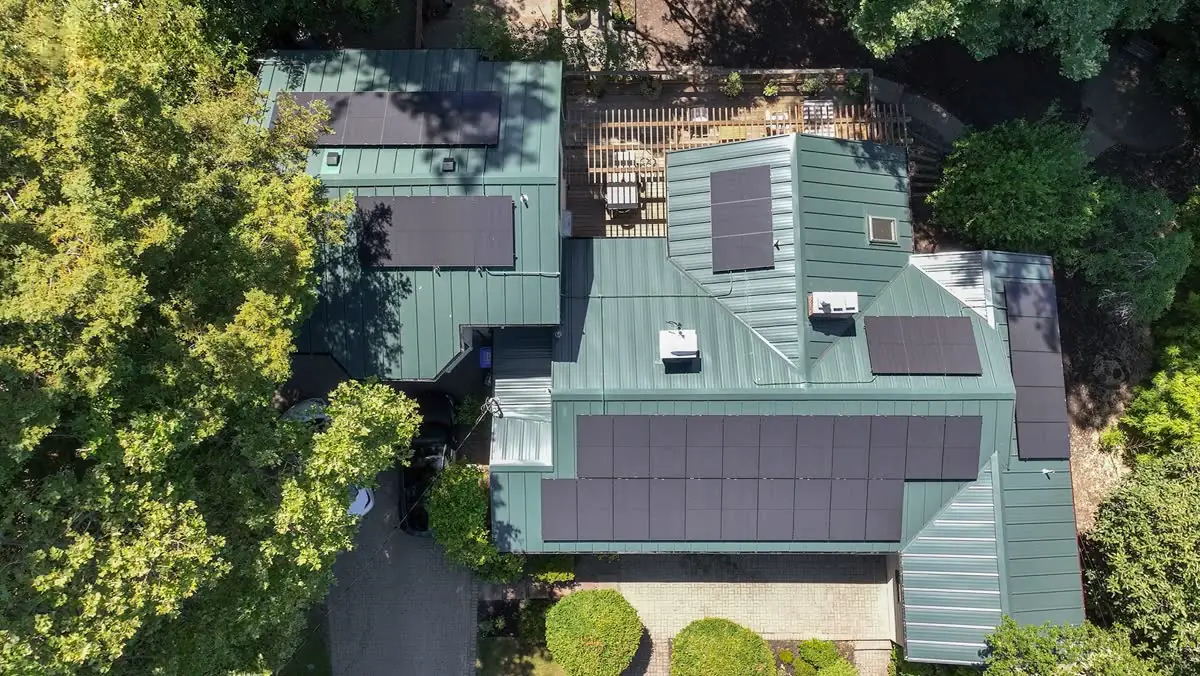
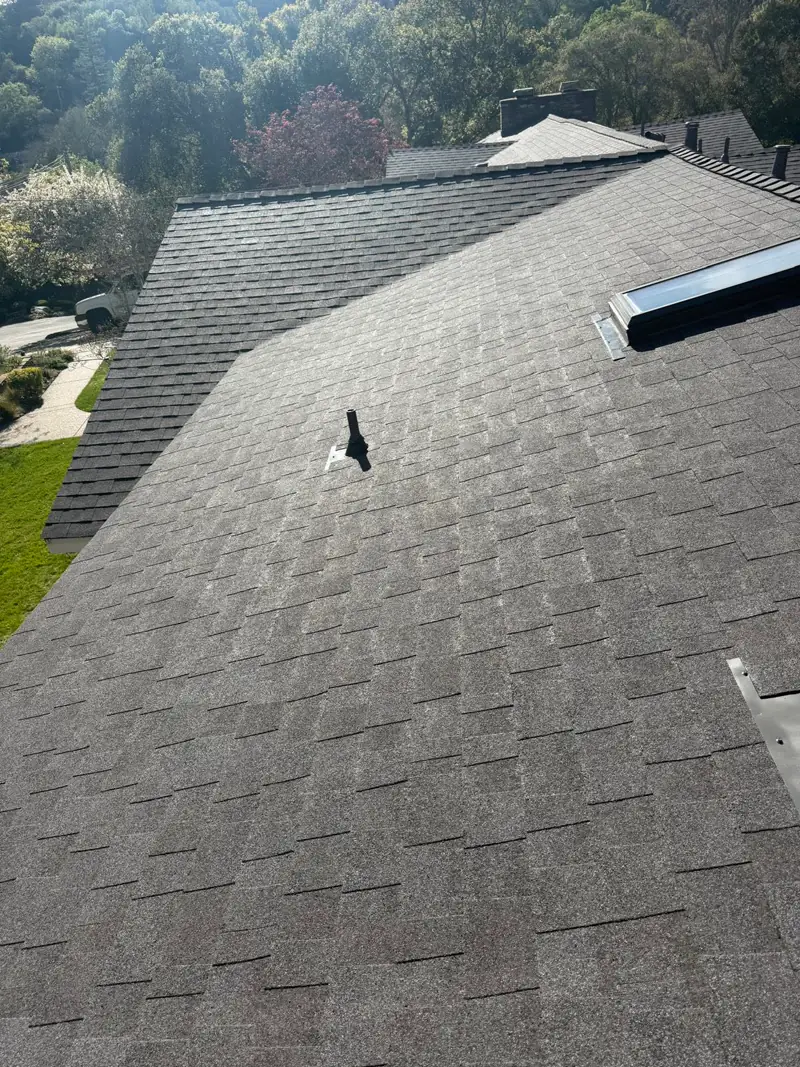
Year workmanship warranty spelled out in your contract, and added to the manufacturer's warranty on the materials.
We are the contractor of record on the permit, and every roof meets Florida code. You have no forms to fill out.
All the old roofing leaves in our trailer, and a magnet sweep of the yard and driveway picks up stray nails.
Florida certified roofing contractor CCC1336568, covered by general liability and workers' comp.
Spread the cost over monthly payments and replace the roof now instead of waiting until you've saved enough.
Belleair Bluffs Roof Leak Questions
The Stain Is in the Hallway, but Nothing on the Roof Above It Looks Wrong. Why?
The opening is usually somewhere else. Rain gets in at a boot, a seam or a piece of wall metal, then runs along the underside of the deck or down a rafter until it finds a low spot to drip from. We start at the wet area in the attic and work up the slope to the opening.
My Leak Is in the Florida Room, Not the Main House. Is That a Different Repair?
Often it is. An added room usually has its own low roof and a seam where that roof meets the house wall. The leak can come from the seam, from the low roof itself, or from the main roof draining onto it. We check all three and tell you which one it is.
I Own a Condo and Water Is Coming Through My Ceiling. Can You Fix the Roof?
In most condo buildings the roof belongs to the association, so the association or its manager decides who repairs it. Report the leak to them in writing, with dates and photos. If the association asks us to look at the roof, we inspect it and report to them.
My Mail Says Belleair Bluffs, FL 33770. Does the City Permit My Repair?
Not always. That mailing address also covers parts of Largo and unincorporated Harbor Bluffs. Search the property on pcpao.gov. If the tax district on the appraiser's record is BBL, the city permits the work through SAFEbuilt. If it is BTF, the parcel is unincorporated and Pinellas County handles the permit.
Can You Just Put Sealant on It?
Not as the repair. Sealant spread over a joint holds for a season or so, then cracks in the sun and hides the gap from the next person who looks. We replace what failed, whether that is a boot, a length of flashing or a stretch of valley.
The Leak Started After a Storm. What Can I Send My Insurer?
You get a documented photo report showing the damage we found and the repair we made. You can share it with your insurer if you decide to file. Any claim is between you and your insurance company.

Get Your Belleair Bluffs Roof Measured, Free.
Enter your address. We'll handle everything else.